You own the content
A video or a web page, made with the tools your team already uses. The data and the design stay yours: we play what you publish and never change it. There is no CMS of ours to learn and no content locked inside our platform.
You bring the content. We bring everything underneath it.
What goes on the screen is a video or a web page, the kind of thing your marketing team already makes for your website and socials. Whether it’s a looping brand film, a promotion or live arrivals and prices, you publish it and we take care of everything that keeps the screen lit.
The display
A commercial display in an outdoor casing, no consumer TV
A commercial-grade display, an outdoor casing rated for rain, sun and freezing temperatures, and an industrial fanless player. No moving parts, and no consumer TV bolted to a wall.
TurtleOS
Our own operating system; a new screen sets itself up
Our own operating system, refined over years of screens in lobbies and stations. Updates go to a few screens first before they reach the rest, and a new screen sets itself up the moment someone plugs it in.
The connection
Mobile data on our own SIM, the building’s line where there is one
Mobile data on our own SIM, so a screen never waits on someone else’s corporate network or IT policy. Where the building has a wired line or WiFi, the screen uses that too and switches over by itself if one drops.
On top
A video or a web page, made by your team
A video or a web page, made with the tools your team already uses. The data and the design stay yours: we play what you publish and never change it. There is no CMS of ours to learn and no content locked inside our platform.
Watched
Every screen reports in, and we can see what it shows
Every screen reports in around the clock, and we can pull up a snapshot of what it’s showing. Nobody has to walk past to check if it’s still on.
The people
A screen that needs attention is sorted before anyone notices
When a screen needs attention, we usually know before anyone in the building does, and we sort it out. Your team doesn’t end up playing helpdesk for a hardware fault.
You own the content. We own the platform. Everything people see on the screen is yours. Everything that has to survive the weather, a power cut or a dropped connection is ours.
A video or a web page, made with the tools your team already uses. The data and the design stay yours: we play what you publish and never change it. There is no CMS of ours to learn and no content locked inside our platform.
A commercial-grade display, an outdoor casing rated for rain, sun and freezing temperatures, and an industrial fanless player. No moving parts, and no consumer TV bolted to a wall.
Our own operating system, refined over years of screens in lobbies and stations. Updates go to a few screens first before they reach the rest, and a new screen sets itself up the moment someone plugs it in.
Mobile data on our own SIM, so a screen never waits on someone else’s corporate network or IT policy. Where the building has a wired line or WiFi, the screen uses that too and switches over by itself if one drops.
Every screen reports in around the clock, and we can pull up a snapshot of what it’s showing. Nobody has to walk past to check if it’s still on.
When a screen needs attention, we usually know before anyone in the building does, and we sort it out. Your team doesn’t end up playing helpdesk for a hardware fault.
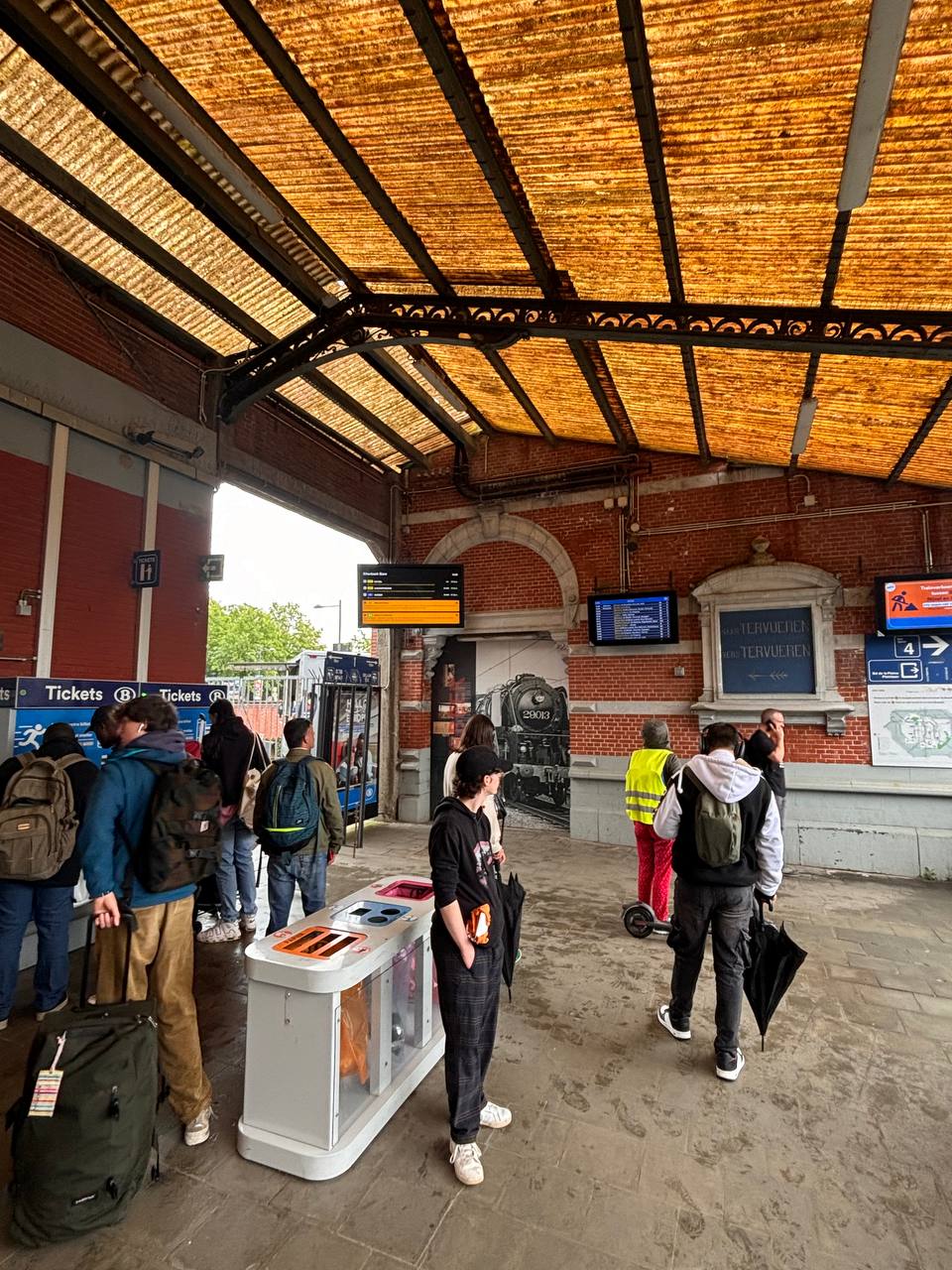
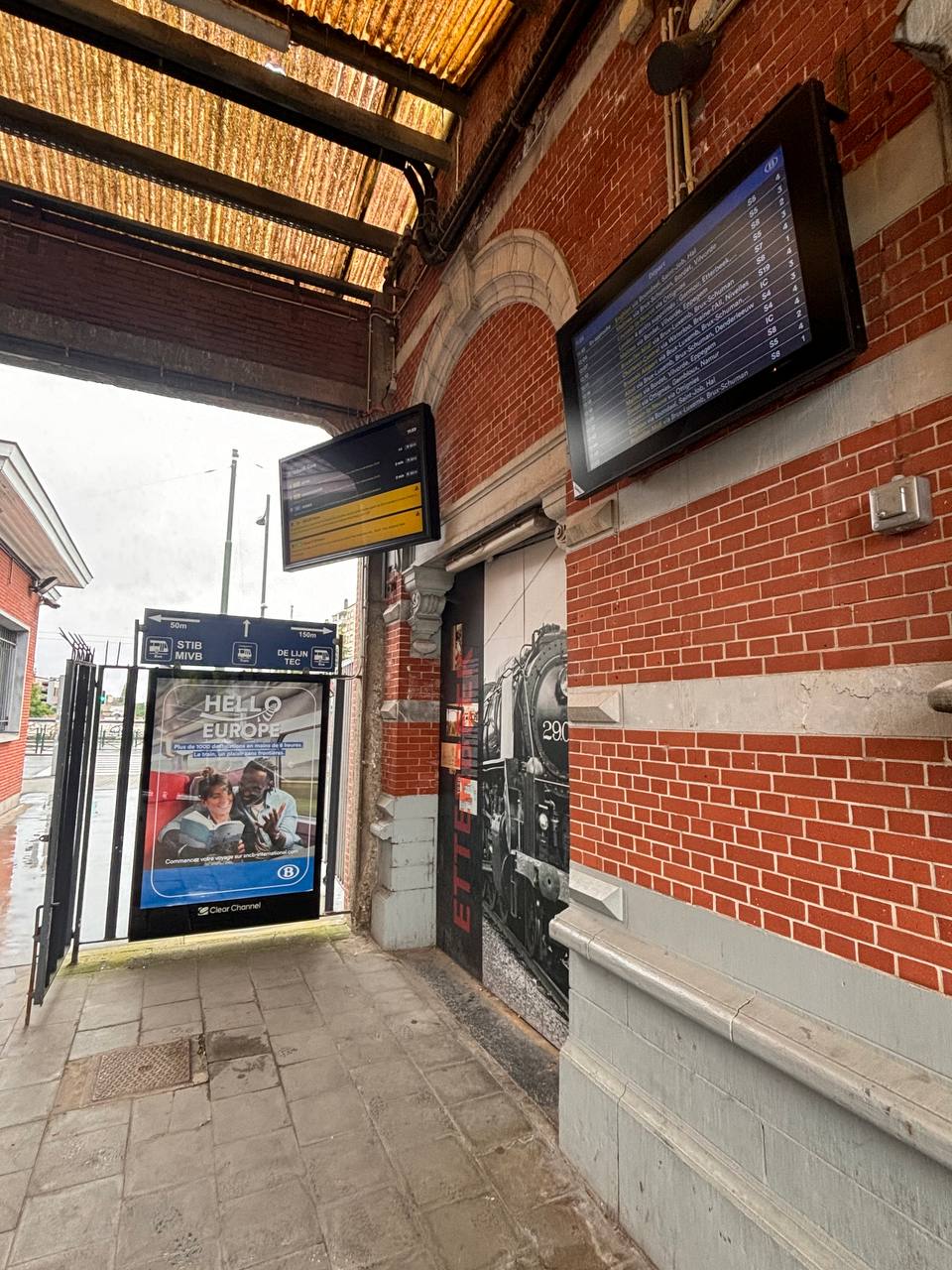
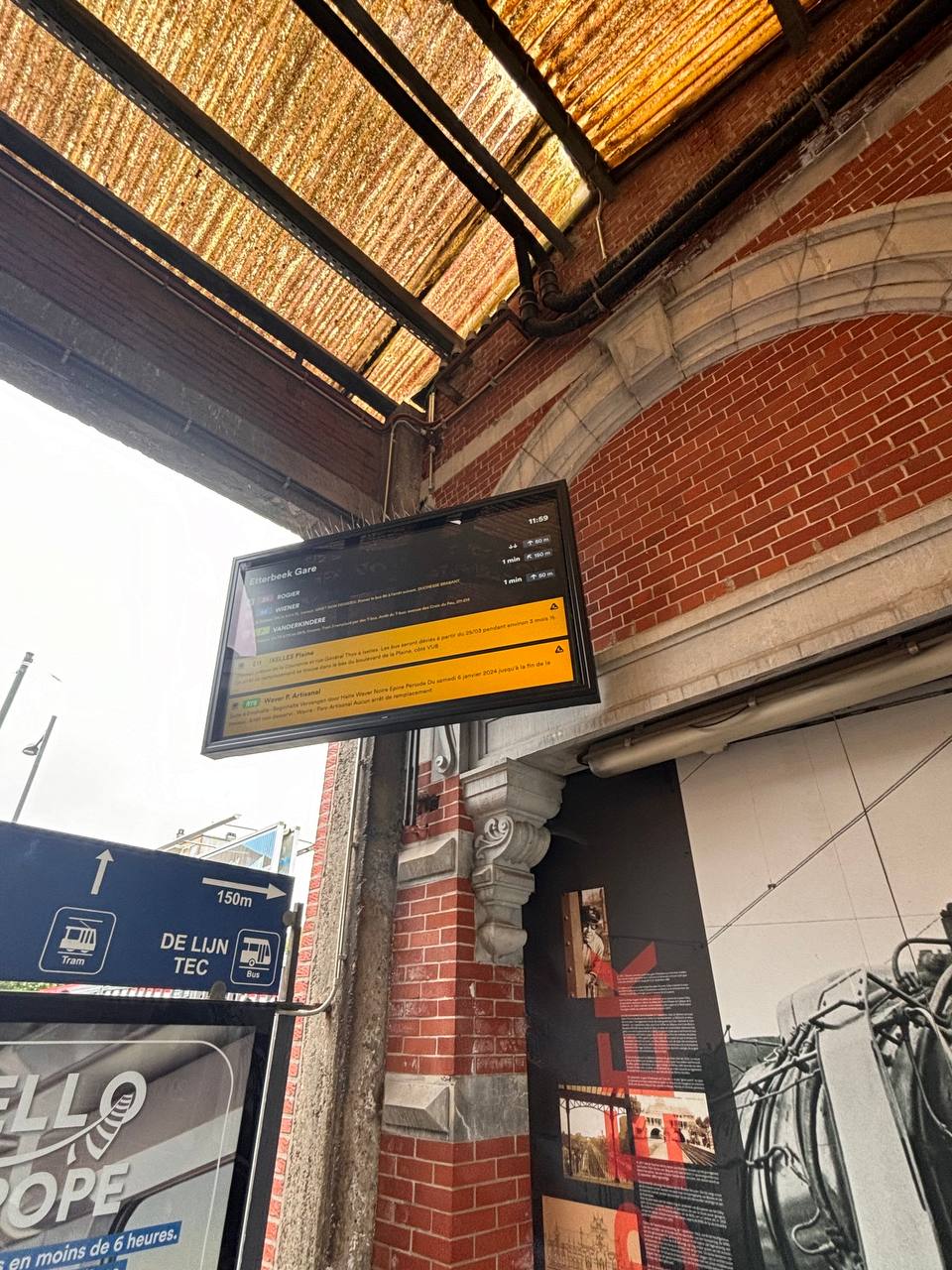
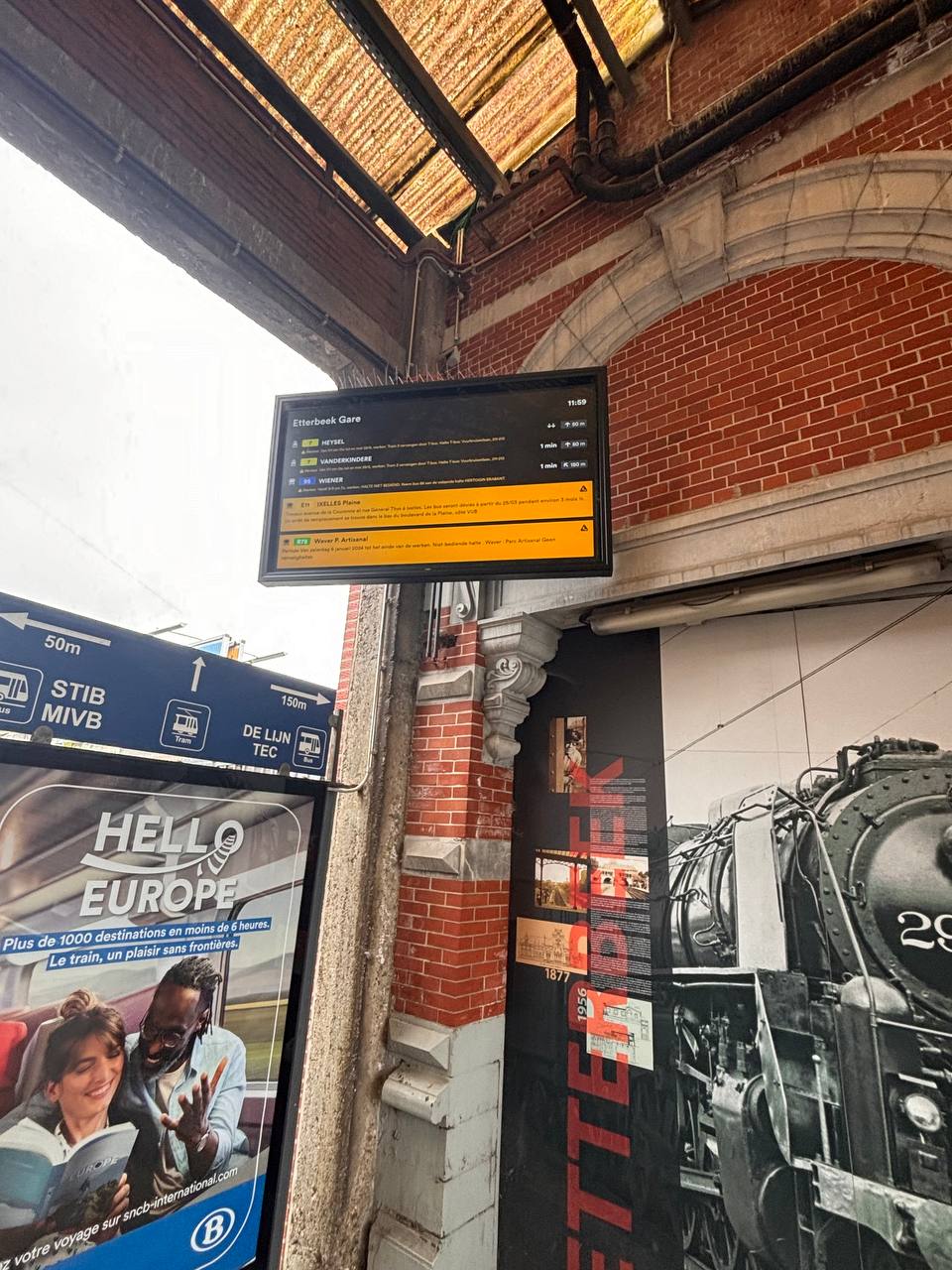
Belgian Mobility Company (formerly Stoomlink) needed a public departure board travellers could read at a glance: train, tram, bus and metro in one view, so you know whether to walk or run. They build and publish it; we put it on the wall and keep it there: the screen, the outdoor casing, the player, TurtleOS, the mobile connection, and the support that keeps it running.
Nothing about the platform is specific to transit. Swap the departure board for a lobby directory, a retail promotion or a logistics arrivals feed, and everything underneath stays the same.
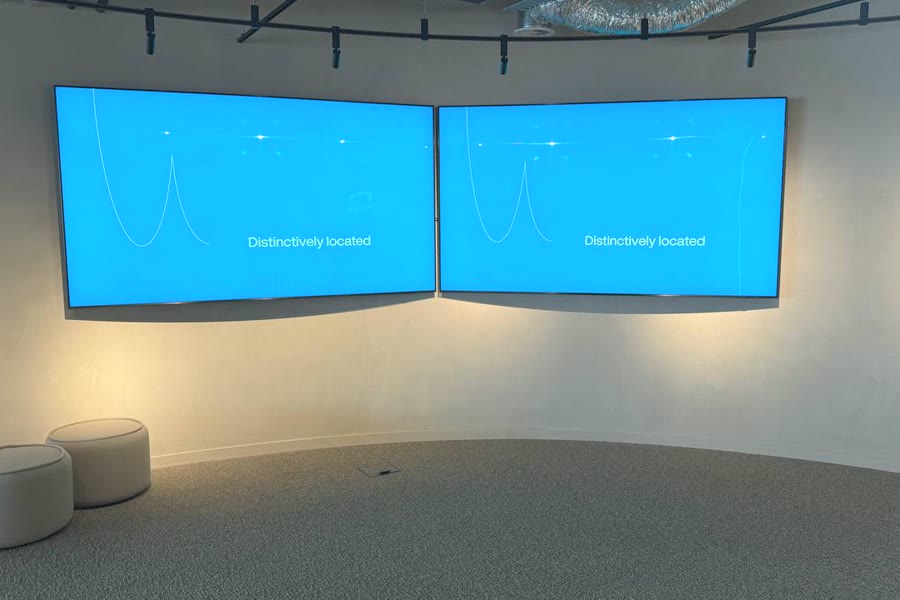
Play one video, or several made to fit together, in sync across as many screens as you like, side by side or spread around a lobby, so a ball can bounce off one screen and land on the next.
There is no video wall controller or other specialised hardware to buy. Every screen has its own player, kept in step by the network clock, and a screen that reboots rejoins the others. It suits marketing suites, like the one at Covent Garden in Brussels, where several videos play across the room and all land in step.
We spend an afternoon in your building and come back with what we’d install, what we’d leave alone and the monthly cost. Free, and no obligation.